


The Starting Stage of Varicose Veins: What Those Aching Legs Are Trying to Tell You
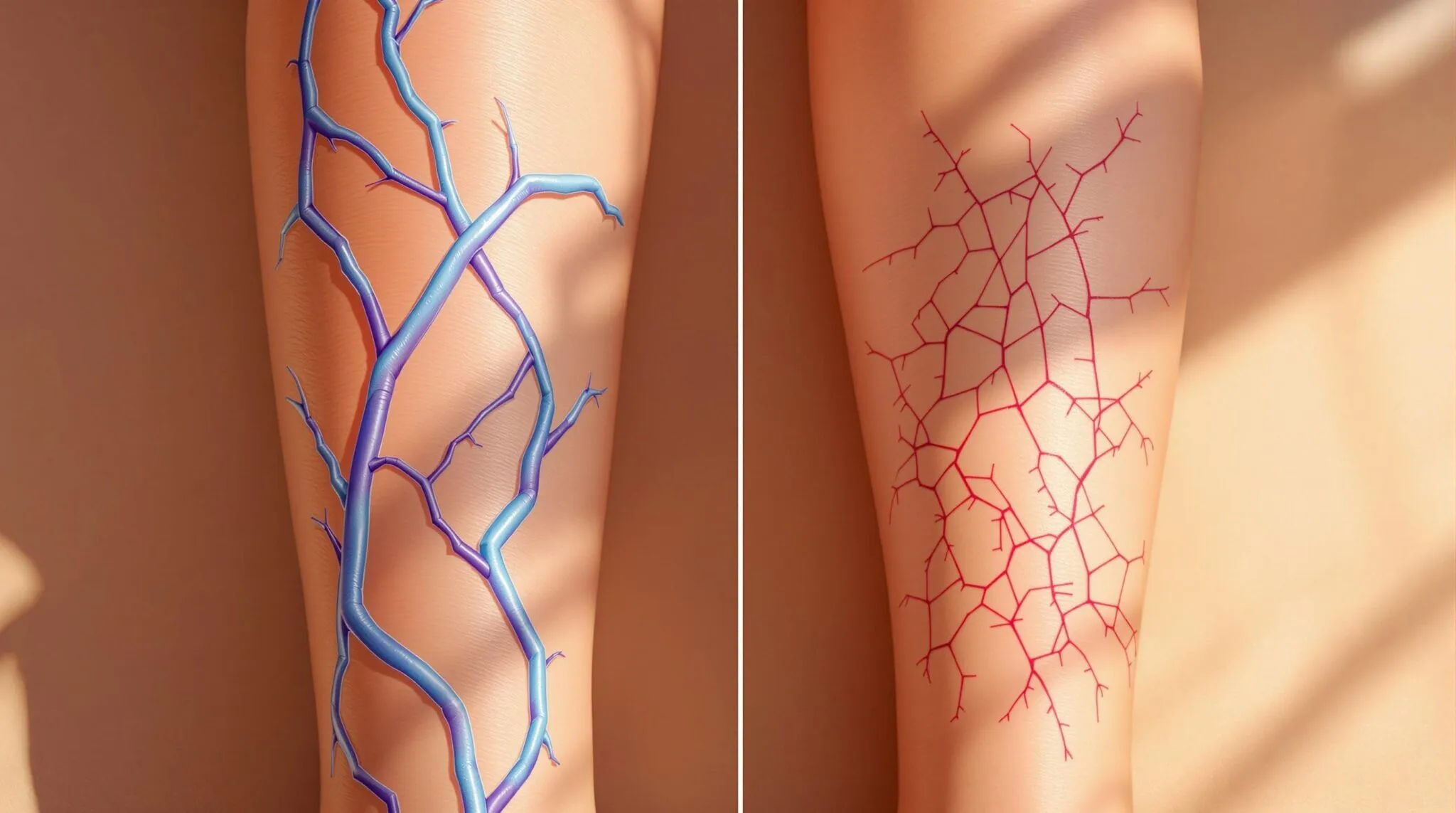
So you have been noticing things lately. Nothing dramatic. Just... little things.
Maybe your legs feel heavier at night than they used to. Maybe you caught yourself looking at a faint blue line behind your knee and thought, "Was that always there?" Or perhaps your ankles look slightly puffy after a long day, and you have been blaming the heat or your shoes.
Here is the thing: your body sends signals long before problems become obvious. And when it comes to your veins, those early whispers matter.
What I am describing is the starting stage of varicose veins. It is that window of time when things are just beginning to go off track—but you still have room to do something about it. Most people ignore this phase entirely. They write it off as normal aging or work fatigue. By the time they take it seriously, the veins are already bulging and painful.
You do not have to be that person.
What Is Actually Happening in There?
Let me paint you a picture of what goes on inside your legs.
Your veins have this tough job. They push blood from your feet all the way up to your heart, fighting gravity the whole way. To pull this off, they have these tiny one-way doors inside them—valves, doctors call them. Blood flows up, the door swings open. Blood passes through, the door slams shut. No leaking back down.
At the starting stage of varicose veins, those doors start failing. Maybe they do not close all the way anymore. Just a little gap. Just a little leak.
Now gravity does its thing. Blood seeps backward. It pools in places it should not pool. The vein walls stretch from the extra pressure. Everything gets a little swollen, a little sluggish.
Here is the crazy part: on the outside, your legs might look completely normal during this phase. Maybe a tiny spider vein here or there. But inside? The plumbing is already struggling. That is why you feel tired before you see anything.
The Signs Nobody Told You About
Everyone thinks varicose veins start as visible veins. Not true. They start as feelings.
The heaviness
You know that sensation like your legs are filled with sand by evening? That is blood pooling. Your veins are working overtime just to keep things moving, and by the end of the day, they are exhausted. So are you.
The restlessness
Ever lie in bed and feel this uncontrollable urge to move your legs? Like something is crawling under your skin and the only relief is kicking or walking? That is not in your head. That is your veins screaming for help.
The swelling
Look at your ankles late in the day. See any puffiness? Maybe the marks from your socks last longer than they should. Fluid settles where circulation is poor. It is one of the earliest clues.
The itch
Some people get this persistent itch right over a vein. They treat it with lotion, change soap, try everything. But it is not dry skin—it is irritation from blood sitting too long in one spot.
If any of this sounds familiar, you are not crazy. You are just in the starting stage of varicose veins.
Why You? (Because Everyone Asks This)
People always want to know why this is happening to them. Was it something they did? Something they did not do?
Sometimes it is just luck of the draw.
Family stuff. Look at your mom's legs. Your dad's. If they had vein problems, your odds shoot way up. You inherited their vein walls and their valves. That blueprint was written before you were born.
Hormones. This is why women deal with this more than men. Pregnancy, menopause, even birth control pills—estrogen relaxes vein walls. Makes them stretchier. Less springy.
Your job. Teachers, nurses, retail workers, office people—anyone stuck in one position for hours. Your calf muscles are supposed to pump blood upward like little hearts. But they cannot pump if they are not moving.
Just getting older. Veins lose elasticity over time. It happens to everyone eventually. The question is how you respond when it starts.
What Actually Helps (The Stuff That Works)
Here is the good news about the starting stage of varicose veins. You actually have power here. This is not a done deal.
Move differently
You do not need to run marathons. You just need to fire up those calf muscles throughout the day.
Try this: set a timer on your phone for every hour. When it goes off, stand up and do ten heel raises. Just lift up onto your toes and lower back down. Takes fifteen seconds. What you are doing is squeezing the pooled blood out of your lower legs and letting fresh circulation in. Works every time.
Compression is your friend
I know compression stockings look like something your grandmother wore. I get it. But they actually help. They squeeze from the outside, supporting those weak vein walls so the valves can close better.
Wear them on days you will be on your feet a lot. Wear them on airplanes. Think of them less as medical equipment and more as a tool that keeps your legs from feeling like lead weights by dinner time.
Watch the salt
Salt makes you hold water. More water in your body means more blood volume. More blood volume means more pressure on those already struggling veins. Ease up on the salty stuff and drink plenty of water instead. It helps more than you would think.
The fifteen-minute trick
Here is something that costs nothing and feels amazing. When you get home from work, lie down on the couch or bed. Prop your legs up on two or three pillows so they are higher than your heart. Stay there for fifteen minutes.
Gravity drains the pooled blood right out of your legs. The heaviness lifts. The swelling goes down. You will actually feel the difference when you stand back up.
When You Need More Than Lifestyle Changes
Here is the honest truth. Lifestyle changes help you manage the starting stage of varicose veins. They reduce symptoms. They slow things down.
But if a valve is truly broken—if that door will not close no matter what—it cannot heal itself. No exercise fixes a permanently stretched-out valve. No diet change repairs structural damage.
So how do you know when it is time to bring in reinforcements?
Pay attention to whether things are getting worse. If the aching turns sharper. If the swelling sticks around even after you elevate. If the veins start bulging where they used to be flat. Those are signs that self-care is not enough anymore.
This is where you want someone who actually understands veins. Not a general doctor who sees this once a month. Someone who looks at legs all day every day.
I have seen people walk into IRFacilities after years of just assuming they had to live with it. They meet with Dr. Sandeep Sharma, and suddenly they realize there were options the whole time. Dr. Sandeep Sharma does not just glance at the surface and say "wear compression." He does an ultrasound and actually sees which valves are failing and how badly. At IRFacilities, they tailor everything to your specific stage—not too much, not too little.
What Treatment Actually Looks Like Now
If the word "treatment" makes you think of hospitals and scars and weeks off work, let me update that picture for you.
Vein treatment today is almost boring in how simple it is.
Laser ablation. They slide a thin fiber into the problem vein. Laser energy seals it shut from the inside. Your body just reroutes blood to healthier veins. You walk out the same day.
Sclerotherapy. For smaller veins, they inject a solution that makes the vein collapse and fade. Takes minutes. No downtime.
Most people go back to normal life the next day. The goal is not just looking better—though that is a nice bonus. The goal is stopping the progression before you end up with skin damage or ulcers down the road.
And here is something that surprises people: insurance usually covers this. Once you have symptoms—pain, swelling, heaviness—it is not cosmetic anymore. It is medical. So do not let money worries stop you from at least asking the question.
What Happens If You Do Nothing
Look, nobody is trying to scare you. But you should know what ignoring the starting stage of varicose veins looks like down the road.
That blood that keeps pooling? Eventually it leaks out of the veins into the surrounding tissue. The skin around your ankles starts turning brownish. Gets leathery. Hardens.
Worst case, you end up with venous ulcers—open sores that form on the legs and take forever to heal. They are painful. They are hard to treat. And they are largely preventable if you deal with things earlier.
None of that is guaranteed. But the risk goes up the longer you wait.
Having the Conversation
Here is what I want you to take away from all this.
The starting stage of varicose veins is not a life sentence. It is just a signal. A heads-up. A chance to do something while doing something is still easy.
You can change how you move and sit and stand. You can wear compression on hard days. You can watch your salt and prop your legs up and pay attention to what your body is telling you.
And when those things are not enough—when the symptoms keep getting worse—you can talk to someone who actually knows this stuff inside and out. Someone like Dr. Sandeep Sharma at IRFacilities, who sees patients at this exact stage every single week and knows exactly what helps and what does not.
Final Thought
Your legs carry you through everything. Every step. Every errand. Every vacation. Every ordinary Tuesday.
They deserve better than "I guess this is just how it is now."
The starting stage of varicose veins is your chance to pay attention before things get loud — says Dr. Sandeep Sharma. Before the pain shows up. Before the visible veins show up. Before you lose the window where simple things actually make a difference.
Try the heel raises. Try the leg elevation. Try the compression. See how your body responds.
And if the symptoms stick around, do not wait years like so many people do. Get the ultrasound. Know what you are dealing with. Have the conversation.
Because you actually do not have to live with tired, heavy, achy legs. There is another way. And the first step is just deciding you want to find it.
الأقسام
- Arts & Entertainment
- Causes
- Crafts
- Dance
- Drinks
- Film
- Health
- Food Trends
- Gaming
- Home & Garden
- Health & Fitness
- Literature
- Music & Concerts
- Networking
- أخرى
- Party
- Religion
- Shopping
- Sports
- Theater
- Wellness
- Cryptocurrency
- NFT Trends
- Coin update
- Lifestyle
- Business & Finance
- Entrepreneurship
- Marketing Strategies
- Personal Finance
- Investment Tips
- Industry Trends
- Technology
- Gadgets & Reviews
- Software & Apps
- Cybersecurity
- Emerging Technologies
- How-To Guides
- التعليم
- Movie & TV Reviews
- Celebrity News
- Book Reviews
- Personal Development
- Motivation & Inspiration
- Life Hacks
- Community & Culture
- Local Events
- Cultural Insights
- Social Issues
- Interviews & Spotlights
- Volunteering & Activism
- Science & Nature
- Animal Behavior
- Beauty Tips
- Fashion Trends
- Product Reviews
- Food & Drink
- Cooking
- Restaurant Reviews
- Travel
- Arts & Crafts
- Photography
- Workout Routines
- Parenting Tips
- News
- Tips & Tricks
- Case Studies
- Product Reviews
- Interviews
- Opinion
- Research & Insights
- Events Coverage
- Personal Stories
- إعلانات
- Trends & Predictions
- Guest Posts
إقرأ المزيد
"Polyethylene Terephthalate (PET) Bottle Market – Industry Trends and Forecast to 2030 Global Polyethylene Terephthalate (PET) Bottle Market, By Type (Virgin, Recycled), Capacity (High, Medium, Low), Distribution Channel (Business to Business, Retail), Color (Transparent, Colored), Technology (Stretch Blow Molding, Injection Molding, Extrusion Blow Molding, Thermoforming, Other),...

"Specialty Fats - Oils Market Size And Forecast by 2031 The study also emphasizes the broader implications of the strategies employed by these companies on the Specialty Fats - Oils Market. Their innovations and market contributions not only shape the industry today but also pave the way for its future trajectory. By analyzing these companies, the report equips stakeholders with actionable...

"Executive Summary Non Alcoholic Beverages Market Size, Share, and Competitive Landscape Global non alcoholic beverages market size was valued at 1,796.60 Billion in 2024 and is projected to reach USD 2614.16 Billion by 2032, with a CAGR of 4.80% during the forecast period of 2025 to 2032 To attain knowhow of market landscape, brand awareness, latest trends, possible future issues,...
Data Bridge Market Research analyses that the additive manufacturing with metal powders market will witness a CAGR of 22.1% for the forecast period of 2022-2029 and is likely to reach at USD 2.111,10 million by 2029. The global business landscape is undergoing a transformation, with industries increasingly leaning on deep research and actionable insights to make strategic decisions. One segment...
Access Control Market Segmentation, By Technology (Authentication System, Detection Systems, Alarm Panels, Communication Devices, and Perimeter Security Systems), Component (Hardware and Software), Vertical (Commercial, Military and Defense, Government, and Others), Service (Installation and Integration, Maintenance and Support, and Access Control as a Service (ACaaS)) – Industry...