


Why Knowledge Intelligence is the Future of Enterprise Decision-Making
Modern enterprises are facing a new kind of challenge. It’s not the lack of data—it’s the overwhelming abundance of it. Every system, platform, and interaction generates information, but turning that information into meaningful decisions remains a struggle.
For years, businesses have relied on Artificial Intelligence to process data and automate workflows. While AI has significantly improved efficiency, it still falls short when it comes to understanding context and delivering truly reliable insights.
This is where Knowledge Intelligence is emerging as a game-changer. It represents a shift from simply analyzing data to actually understanding it. As organizations move toward smarter, faster, and more accurate decision-making, Knowledge Intelligence Systems are becoming essential.
The Problem with Traditional Decision-Making
Enterprise decision-making has traditionally been driven by reports, dashboards, and historical data. While these tools provide valuable insights, they often operate in silos. Different departments use different systems, leading to fragmented information.
Even with AI, many organizations still struggle with:
- Inconsistent insights
- Lack of context
- Data silos across teams
- Difficulty in making real-time decisions
AI can process large volumes of data, but it doesn’t always understand how that data connects. This creates a gap between information and action.
What is Knowledge Intelligence?
Knowledge Intelligence focuses on transforming raw data into structured, meaningful knowledge. Instead of just analyzing data points, it connects them, identifies relationships, and builds context.
Knowledge Intelligence Systems enable organizations to:
- Link information across multiple sources
- Understand relationships between data
- Deliver context-aware insights
- Support smarter decision-making
With the rise of AI-powered Knowledge Intelligence, businesses can combine the speed of AI with the depth of knowledge. This allows systems to not only generate outputs but also explain them.
Why Knowledge Intelligence is Critical for Enterprises
In today’s fast-moving environment, decisions need to be both quick and accurate. This is where Enterprise Knowledge Intelligence plays a crucial role.
By integrating knowledge across the organization, businesses can break down silos and create a unified view of information. This leads to better collaboration and more informed decisions.
Unlike traditional systems, Knowledge Intelligence for AI Systems ensures that AI outputs are grounded in real context. This reduces errors and improves trust in automated systems.
Enterprises that adopt Enterprise Knowledge AI are able to move beyond reactive decision-making. They can anticipate challenges, identify opportunities, and respond more effectively.
How Knowledge Intelligence Transforms Decision-Making
The impact of Knowledge Intelligence goes beyond technology—it changes how decisions are made.
First, it improves clarity. Instead of dealing with scattered data, decision-makers get a connected view of information. This makes it easier to understand the full picture.
Second, it enhances accuracy. By adding context and relationships, AI-powered Knowledge Intelligence reduces the chances of misinterpretation.
Third, it enables real-time insights. With structured knowledge systems, businesses can respond to changes instantly, rather than relying on outdated reports.
Finally, it builds confidence. When decisions are backed by clear, contextual understanding, leaders can act with greater certainty.
Real-World Impact Across Industries
Across industries, Knowledge Intelligence Systems are driving meaningful change.
In enterprises, they improve internal knowledge sharing and reduce time spent searching for information. Employees can access the right insights at the right time, increasing productivity.
In healthcare, Knowledge Intelligence connects patient data with medical knowledge, leading to more accurate diagnoses and better outcomes.
In finance, it helps organizations understand risk by analyzing not just numbers, but relationships and patterns.
These real-world applications highlight how Enterprise Knowledge Intelligence is becoming a critical foundation for modern decision-making.
The Future of Enterprise Decision-Making
The future of enterprise decision-making will not be driven by data alone. It will be driven by understanding.
As businesses continue to evolve, the integration of AI with knowledge systems will become standard. Organizations will rely on Knowledge Intelligence for AI Systems to ensure that their technology is not just fast, but also reliable and meaningful.
Enterprise Knowledge AI will play a key role in building intelligent ecosystems where data, information, and knowledge work together seamlessly.
In this future, decision-making will become more proactive, more accurate, and more strategic.
What Makes Knowledge Intelligence the Future?
The reason Knowledge Intelligence is shaping the future is simple—it addresses the core limitation of modern systems.
Data alone is not enough. Even AI alone is not enough.
What businesses need is a way to connect, understand, and apply knowledge in real time. This is exactly what Knowledge Intelligence Systems provide.
They transform complexity into clarity and enable organizations to make decisions that are not just fast, but also meaningful.
Conclusion
As enterprises navigate an increasingly complex digital landscape, the ability to make smart decisions has become a key competitive advantage.
While AI has laid the foundation, it is Knowledge Intelligence that completes the picture. By adding context, structure, and meaning, it enables organizations to unlock the true value of their data.
The future belongs to businesses that can go beyond data and embrace understanding.
And as this transformation continues, companies like Agixtech, an emerging Agentic Intelligence Company, are helping shape the next generation of intelligent, decision-driven systems.
Categorias
- Arts & Entertainment
- Causes
- Crafts
- Dance
- Drinks
- Film
- Health
- Food Trends
- Gaming
- Home & Garden
- Health & Fitness
- Literature
- Music & Concerts
- Networking
- Outro
- Party
- Religion
- Shopping
- Sports
- Theater
- Wellness
- Cryptocurrency
- NFT Trends
- Coin update
- Lifestyle
- Business & Finance
- Entrepreneurship
- Marketing Strategies
- Personal Finance
- Investment Tips
- Industry Trends
- Technology
- Gadgets & Reviews
- Software & Apps
- Cybersecurity
- Emerging Technologies
- How-To Guides
- Educação
- Movie & TV Reviews
- Celebrity News
- Book Reviews
- Personal Development
- Motivation & Inspiration
- Life Hacks
- Community & Culture
- Local Events
- Cultural Insights
- Social Issues
- Interviews & Spotlights
- Volunteering & Activism
- Science & Nature
- Animal Behavior
- Beauty Tips
- Fashion Trends
- Product Reviews
- Food & Drink
- Cooking
- Restaurant Reviews
- Travel
- Arts & Crafts
- Photography
- Workout Routines
- Parenting Tips
- News
- Tips & Tricks
- Case Studies
- Product Reviews
- Interviews
- Opinion
- Research & Insights
- Events Coverage
- Personal Stories
- Avisos
- Trends & Predictions
- Guest Posts
Leia Mais
Executive Summary GCC Cyber Security Market: Share, Size & Strategic Insights The key topics that have been described in this GCC Cyber Security Market report include market definition, market segmentation, key developments, competitive analysis, and research methodology. GCC Cyber Security Market report analyzes the market status, growth rate, future trends, market drivers, market...

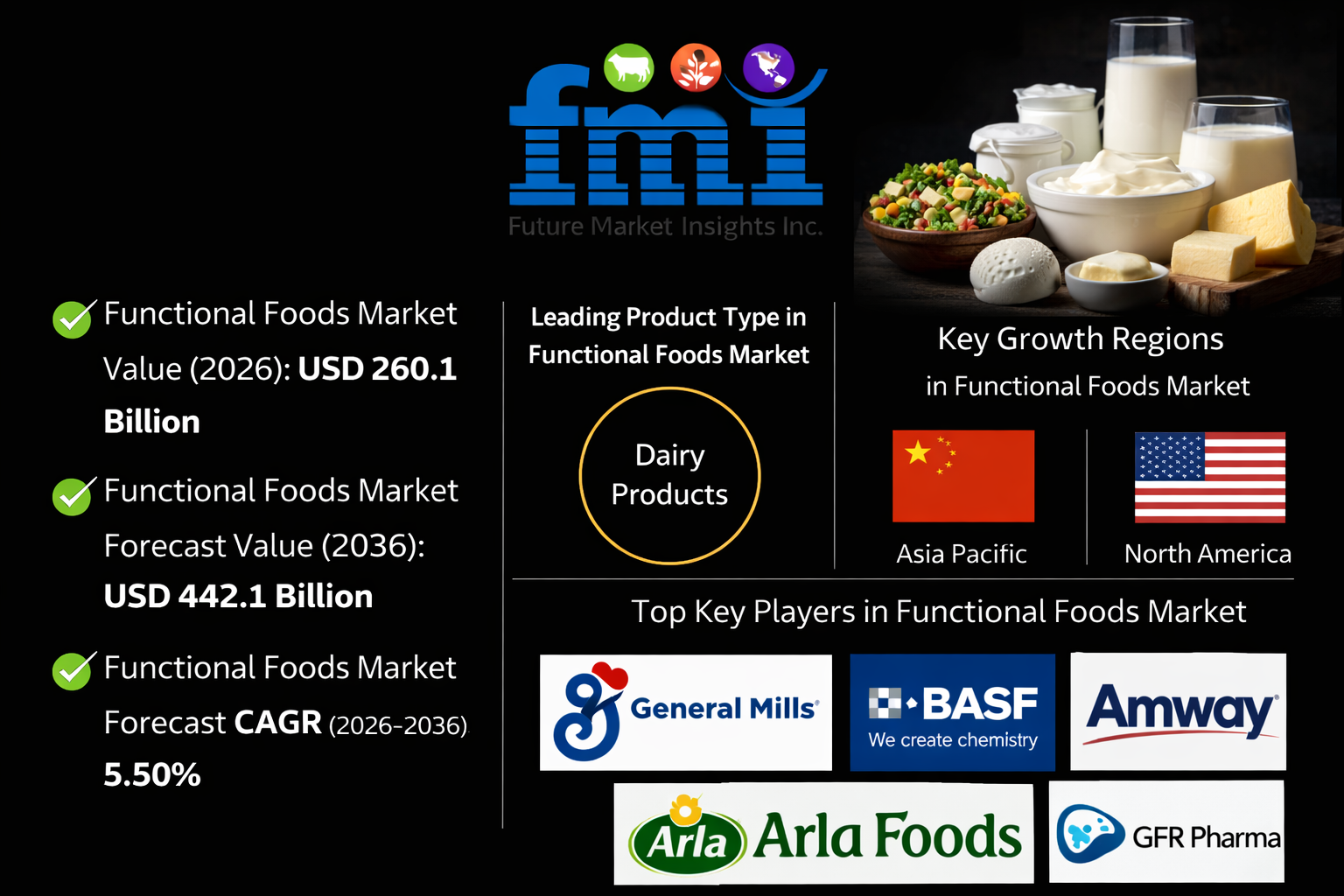
Functional Foods Market Outlook The global functional foods market is entering a decisive growth phase as consumers worldwide increasingly prioritize nutrition that delivers measurable health benefits beyond basic sustenance. Valued at USD 260.1 billion in 2026, the market is projected to expand to USD 442.1 billion by 2036, advancing at a steady compound annual growth rate (CAGR) of 5.50%...
Executive Summary In Vivo Contract Research Organization (CRO) Market Data Bridge Market Research analyses that the in vivo contract research organization (CRO) market which was USD 3.94 billion in 2021, would rocket up to USD 7.46 billion by 2029, and is expected to undergo a CAGR of 8.30% during the forecast period. All the data and information mentioned in this In Vivo Contract...
Regional dynamics play a pivotal role within the Retinoid Market, with varying adoption rates, regulatory frameworks and consumer preferences influencing market share and growth. North America currently holds a substantial share, supported by a mature skincare market, high per-capita spending, and strong prescription-based dermatology infrastructure. Europe follows closely, while Asia-Pacific,...
The Crop Enhancement Agricultural Biologicals Market sector is undergoing rapid transformation, with significant growth and innovations expected by 2028. In-depth market research offers a thorough analysis of market size, share, and emerging trends, providing essential insights into its expansion potential. The report explores market segmentation and definitions, emphasizing key...