Introduction
Many people assume electroplating is simply a process of coating metal with another metal. In reality, electroplating is a precise engineering process that requires careful preparation, controlled chemical reactions, and strict quality inspection to achieve a durable and uniform finish.
Industries ranging from electronics to luxury architectural design depend on professional electroplating services to improve corrosion resistance, conductivity, appearance, and longevity of metal components. When done correctly, electroplating transforms ordinary metal parts into high-performance components capable of meeting demanding industrial standards.
Companies such as Arab Art Metal specialise in delivering reliable plating solutions for manufacturers, engineers, and designers who require precision and consistency. In this guide, we will walk through the complete electroplating service process, from initial pre-treatment to final inspection, so you can understand what happens behind the scenes.
What is Electroplating Service?
Electroplating is a metal finishing process in which a thin layer of one metal is deposited onto another metal surface using an electrical current. The process improves both the functional and aesthetic properties of the base material.
Industries rely on electroplating services for several reasons:
-
Protection against corrosion and oxidation
-
Improved electrical conductivity
-
Enhanced durability and wear resistance
-
Decorative and luxury finishes
-
Better solderability in electronic components
Common metals used in electroplating include:
-
Gold
-
Silver
-
Nickel
-
Chrome
-
Copper
-
Zinc
-
Tin
Each metal provides specific performance benefits depending on the application.
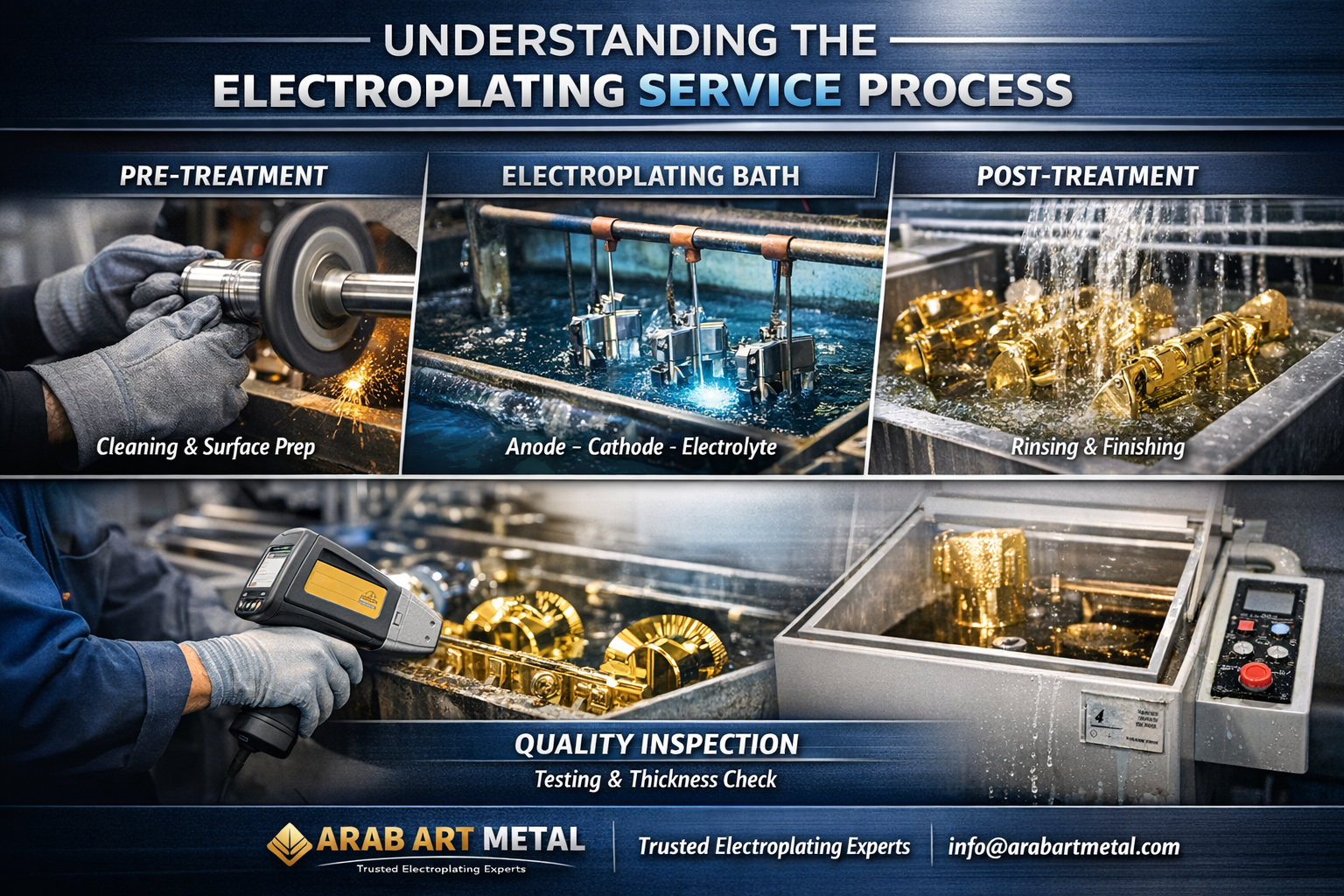
Stage 1: Pre-Treatment Process
Pre-treatment is often considered the most critical step in the electroplating process. Even the most advanced plating bath cannot produce high-quality results if the metal surface is not properly prepared.
Mechanical Cleaning
The process begins with mechanical cleaning techniques such as:
-
Grinding
-
Polishing
-
Buffing
These methods remove surface imperfections, rust, and oxidation. Smooth surfaces allow the plating layer to bond properly.
Chemical Cleaning
Next, chemical cleaning removes oils, grease, and contaminants. Common methods include:
-
Degreasing solutions
-
Acid pickling
These treatments ensure that the metal surface is chemically clean before entering the plating bath.
Electrolytic Cleaning
Electrolytic cleaning uses electrical current to remove microscopic contaminants that mechanical or chemical cleaning may miss.
Rinsing and Surface Activation
After cleaning, the metal components are rinsed thoroughly with purified water and treated with activation solutions that prepare the surface for plating.
If pre-treatment is skipped or done incorrectly, the plating layer may peel, blister, or fail prematurely. That is why experienced providers like Arab Art Metal emphasize strict preparation standards.
Stage 2 : Electroplating Bath Process
Once the surface is fully prepared, the component moves into the electroplating bath, where the actual metal coating forms.
The plating bath contains three essential elements:
-
Anode – the metal source that supplies plating ions
-
Cathode – the metal component receiving the plating layer
-
Electrolyte solution – a chemical bath containing dissolved metal ions
When electrical current passes through the system, metal ions move through the solution and deposit onto the surface of the component.
Several factors must be precisely controlled to achieve high-quality plating:
Different applications require different plating bath types, including:
Maintaining these parameters ensures consistent plating results across batches.
Stage 3 : Plating Deposition and Thickness Control
During this stage, metal ions gradually form a coating on the surface of the base metal. This deposition process determines the final thickness and durability of the plating layer.
Thickness plays an important role in performance. For example:
Many industries follow international standards defined by organizations such as ASTM International and International Organization for Standardization, which specify coating thickness requirements for various applications.
At Arab Art Metal, advanced monitoring systems help maintain uniform plating thickness across complex components, ensuring consistent quality regardless of part geometry.
Stage 4 : Post-Treatment Process
After plating, the metal components undergo several finishing treatments to enhance durability and appearance.
Rinsing and Neutralisation
The plated parts are rinsed with deionised water to remove any remaining chemicals from the surface.
Passivation and Sealing
Certain metals require passivation treatments that improve corrosion resistance and extend coating life.
Heat Treatment
Some components undergo heat treatment to relieve hydrogen embrittlement, a condition that can weaken metals during electroplating.
Polishing and Buffing
For decorative or luxury applications, polishing and buffing improve surface shine and provide a premium finish.
Stage 5 : Quality Inspection and Testing
Before components are approved for delivery, they undergo strict inspection and testing procedures.
Visual Inspection
Technicians inspect each component to ensure the finish is smooth, uniform, and free from defects.
Adhesion Testing
Adhesion tests confirm that the plating layer bonds properly to the base metal.
Coating Thickness Measurement
Advanced tools such as X-ray fluorescence (XRF) measure plating thickness accurately.
Corrosion Resistance Testing
Salt spray testing simulates harsh environmental conditions to evaluate corrosion resistance.
By maintaining strict quality control at every stage, Arab Art Metal ensures reliable electroplating results for industrial and decorative applications.
Electroplating supports a wide range of industries and applications.
Jewellery and Decorative Metals
Gold and silver plating enhance the appearance and value of jewellery and luxury products.
Electronics and PCB Manufacturing
Copper, gold, and tin plating improve conductivity and solderability in electronic circuits.
Aerospace and Defense
Plating protects critical components from corrosion and extreme environmental conditions.
Automotive Industry
Chrome and nickel plating enhance durability and aesthetic appeal in automotive trims and components.
Architectural and Ornamental Metalwork
Electroplating provides luxury finishes for gates, railings, and decorative metal structures.
Medical Devices
Precision plating ensures hygiene, durability, and reliable performance in medical equipment.
Why Choose Arab Art Metal for Electroplating Services
Selecting the right electroplating partner is essential for achieving consistent results and long-term reliability.
Arab Art Metal stands out for several key reasons:
-
Extensive expertise in electroplating technology
-
Modern plating facilities with advanced equipment
-
Customised solutions for different industries
-
Compliance with international quality standards
-
Efficient production timelines and competitive pricing
Whether a project involves decorative metalwork or high-precision industrial components, Arab Art Metal provides solutions tailored to each client’s requirements.
Conclusion
Electroplating is a sophisticated process that combines chemical science, engineering precision, and strict quality control. From thorough pre-treatment and carefully managed plating baths to detailed inspection procedures, every stage plays a vital role in ensuring a durable and high-quality finish.
Businesses that rely on professional electroplating services benefit from improved product performance, enhanced aesthetics, and long-lasting protection for metal components.
Ready to elevate your metal components with precision electroplating?
Contact Arab Art Metal today at info@arabartmetal.com and get a customised electroplating solution tailored to your project needs.