5 Things Korean and Japanese Beauty Experts Have Known for Centuries — That Chinese Skincare Brands Are Finally Catching Up On
The beauty editor sat in a small tea house in Chengdu.
Across from her was a woman in her late sixties. Skin smooth, pores invisible, the kind of quiet luminosity that no filter could replicate and no serum could fully explain. The editor had been writing about skincare for eleven years. She had reviewed hundreds of products, interviewed dozens of dermatologists, and sat in more brand launch events than she could count.
She leaned forward and asked the only question that mattered.
"What do you actually use?"
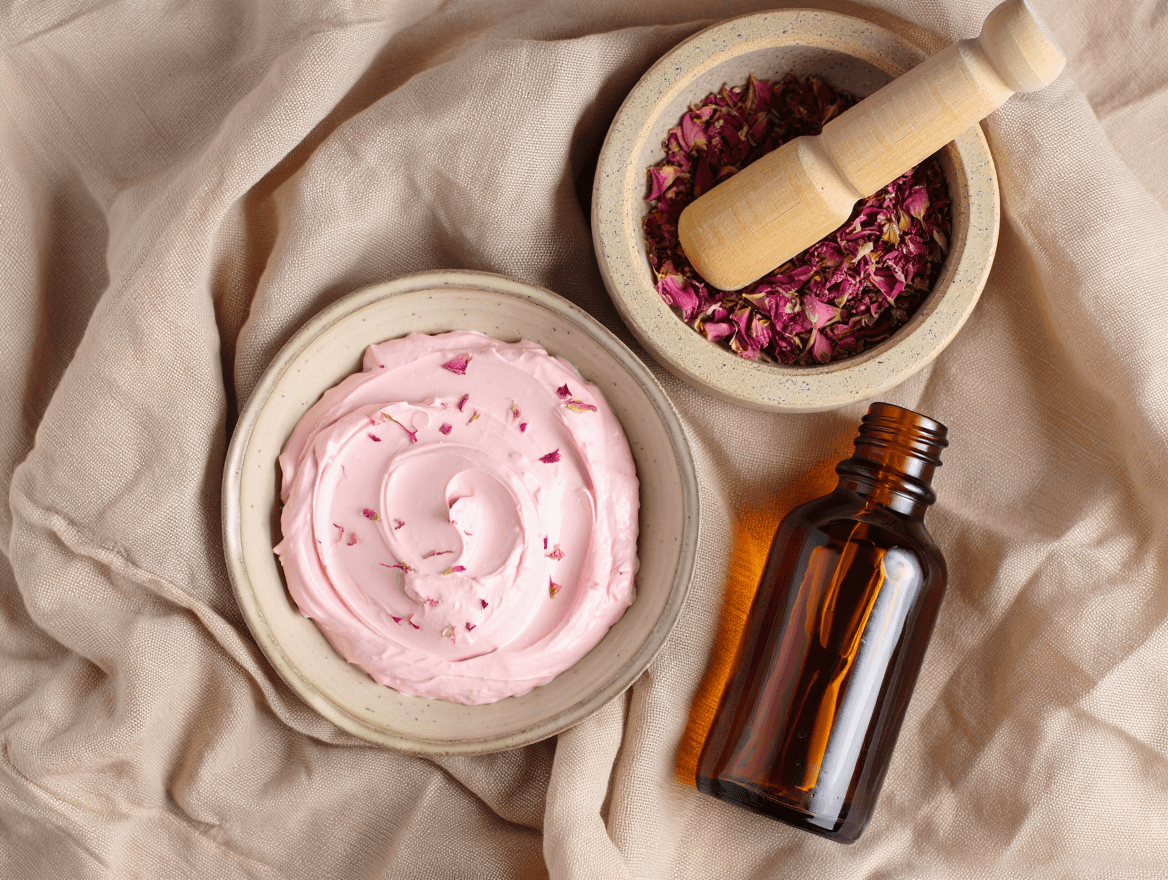
The woman smiled and slid a small ceramic bowl across the table. Inside was a dark crimson liquid, faintly fragrant, still warm. Rose petal tea — brewed from dried petals, steeped slowly, drunk every morning for forty years.
"And this," the woman added, tapping a simple glass bottle of rose water on the table beside her cup. On her face every evening. Nothing else.
The editor went home and threw away half her shelf.
Beauty Tip One: Your Toner Is Probably Working Against You
Most commercial toners sold in China contain alcohol, synthetic fragrance, and pH-disrupting preservatives that strip the skin's natural barrier faster than almost any other product in a typical routine. The skin compensates by overproducing oil. Pores enlarge. Sensitivity increases. Then consumers buy more products to fix the problems their toner created.
The oldest toner in the world has no alcohol, no synthetic fragrance, and no preservatives. It is simply water that has been distilled through rose petals — capturing the plant's natural polyphenols, flavonoids, and gentle astringents in their most bioavailable form.
Genuine rose water — not the fragrance water sold in pretty bottles, but actual distilled rose water from real dried petals — balances the skin's pH, reduces redness, tightens pores gently, and leaves the face calm rather than stripped. Applied morning and night with a cotton pad or fingertips, it is the one-step toner routine that dermatologists in both East and West are increasingly recommending as synthetic alternatives fall out of favor.
The difference between real and synthetic rose water is immediate. Real rose water smells like a garden. Synthetic rose water smells like a candle. Your skin knows the difference even when your nose is not sure.
Beauty Tip Two: The Best Face Mask Costs Almost Nothing and Takes Two Minutes
The K-beauty industry built a multi-billion dollar sheet mask category on the promise of an intense, concentrated skin treatment in twenty minutes. Most sheet masks deliver the same basic function: occlusion — holding moisture against the skin long enough for it to absorb.
There is a simpler version that has existed for centuries and outperforms most commercial masks on every metric that matters.
Rose powder — finely milled from dried rose petals at peak bloom — mixed with raw honey or plain yogurt creates a treatment mask that delivers antioxidants, natural AHA activity from the lactic acid in yogurt, anti-inflammatory compounds from the rose, and genuine hydration from the honey. Two minutes to mix. Fifteen minutes on the face. Rinsed away to reveal skin that looks as though it has been sleeping properly, drinking enough water, and managing stress perfectly.
Chinese beauty consumers on Xiaohongshu have been sharing variations of this recipe for years. What separates the results people rave about from the ones that disappoint is almost always the quality of the rose powder. Pale, odorless powder from degraded petals delivers nothing. Deep crimson powder from properly dried Pakistani roses — harvested at peak bloom and processed without bleaching — delivers everything the recipe promises.
The mask works. The ingredient just has to be real.
Beauty Tip Three: What You Drink Shows Up on Your Face
Traditional Chinese medicine has understood this for over two thousand years. The skin is not a separate system. It is the outermost expression of what is happening inside the body — and specifically, inside the liver, the lymphatic system, and the circulatory network that feeds every skin cell from beneath.
Rose petal tea is one of the oldest internal beauty treatments in both Chinese and Persian wellness traditions. Dried rose petals steeped in hot water release compounds that support liver detoxification, improve circulation, and reduce systemic inflammation — all of which show up on the face as clearer skin, reduced puffiness, and a more even tone over time.
This is not folklore. The functional benefits of consuming rose petals have been examined by researchers interested in the plant's polyphenol content and its effects on oxidative stress. What grandmothers in Sichuan and Tehran knew by observation, science is now explaining in molecular detail.
A cup of rose petal tea every morning costs almost nothing. The effect on skin, sustained over months, costs even less than that.
Beauty Tip Four: Your Cleanser Should Leave Your Skin Feeling Like Skin
The squeaky clean feeling that many cleansers produce is not a sign of cleanliness. It is a sign of damage — the skin's lipid barrier partially dissolved, its natural microbiome disrupted, its pH pushed out of its optimal range.
Genuine rose soap — made from real rose extract rather than synthetic rose fragrance — cleanses without stripping. The natural emollients in rose work with the skin's barrier rather than against it. The result after washing is not tightness but softness. Not dryness but balance.
For Chinese consumers with sensitive skin — a demographic that is growing as urban pollution and stress increasingly compromise skin barrier function — a cleanser that respects the barrier while actually cleaning is not a luxury. It is a necessity. The switch from a synthetic fragrance cleanser to a genuine botanical one is one of the highest-impact, lowest-cost changes a skincare routine can make.
Beauty Tip Five: The Mist on Your Desk Is Either Helping or Doing Nothing
Face mists have become one of the most popular skincare formats on Chinese e-commerce — a quick refresh during long office hours, a hydration boost between flights, a setting spray after makeup. The category is enormous. The quality variation is equally enormous.
A rose water spray made from genuine distilled rose water delivers real hydration, genuine anti-inflammatory benefit, and the kind of subtle fragrance that reduces stress rather than triggering it. A mist made from water, synthetic rose fragrance, and glycerin delivers the sensation of hydration without much of the function.
The test is simple. Spray genuine rose water on the back of your hand and let it dry. Your skin should feel softer, not the same. The fragrance should smell like a flower, not a perfume counter. If it passes both tests, it belongs on your desk.
The Ingredient Behind All of It
Every tip on this list leads back to the same plant. The rose — specifically the dry red rose harvested at peak season, dried without synthetic intervention, and processed with the care that preserves what makes it functionally extraordinary — is the one botanical that bridges ancient beauty wisdom and modern skincare science more completely than almost anything else.
For Chinese brands building in the natural beauty space, for formulators looking for an ingredient with genuine heritage and genuine efficacy, and for consumers tired of complexity — the full range of rose products sourced from Pakistani roses and exported by Harmain Global offers something the synthetic industry simply cannot match.
Not a trend. Not a marketing claim. A flower that has been making skin beautiful for three thousand years and shows absolutely no sign of stopping.
Harmain Global supplies premium dry red rose petals, rose water, rose powder, rose soap, and rose water spray to beauty brands, wellness companies, and botanical importers worldwide. Inquiries: info@harmainglobal.com — harmainglobal.com
Categorias
- Arts & Entertainment
- Causes
- Crafts
- Dance
- Drinks
- Film
- Health
- Food Trends
- Gaming
- Home & Garden
- Health & Fitness
- Literature
- Music & Concerts
- Networking
- Outro
- Party
- Religion
- Shopping
- Sports
- Theater
- Wellness
- Cryptocurrency
- NFT Trends
- Coin update
- Lifestyle
- Business & Finance
- Entrepreneurship
- Marketing Strategies
- Personal Finance
- Investment Tips
- Industry Trends
- Technology
- Gadgets & Reviews
- Software & Apps
- Cybersecurity
- Emerging Technologies
- How-To Guides
- Educação
- Movie & TV Reviews
- Celebrity News
- Book Reviews
- Personal Development
- Motivation & Inspiration
- Life Hacks
- Community & Culture
- Local Events
- Cultural Insights
- Social Issues
- Interviews & Spotlights
- Volunteering & Activism
- Science & Nature
- Animal Behavior
- Beauty Tips
- Fashion Trends
- Product Reviews
- Food & Drink
- Cooking
- Restaurant Reviews
- Travel
- Arts & Crafts
- Photography
- Workout Routines
- Parenting Tips
- News
- Tips & Tricks
- Case Studies
- Product Reviews
- Interviews
- Opinion
- Research & Insights
- Events Coverage
- Personal Stories
- Avisos
- Trends & Predictions
- Guest Posts
Leia mais
In today's digital age, having a strong online presence is essential for businesses of all sizes. A well-designed website is the cornerstone of this presence, and choosing the right website design agency can make all the difference. Bath is home to a range of professional web development and digital marketing firms that specialize in crafting custom websites tailored to your business needs....

The Inorganic Chemical Packaging Market sector is undergoing rapid transformation, with significant growth and innovations expected by 2030. In-depth market research offers a thorough analysis of market size, share, and emerging trends, providing essential insights into its expansion potential. The report explores market segmentation and definitions, emphasizing key components and...

Beard hair transplant in Dubai (زراعة شعر اللحية في دبي) have become increasingly popular among men who wish to enhance their facial hair for aesthetic or personal reasons. Among the global destinations offering top-quality hair restoration services, Dubai stands out as a premier choice. With advanced technology, experienced specialists, and world-class clinics like TAJMEELS CLINIC DUBAI, the...

"Executive Summary Europe Digital Health Monitoring Devices Market : CAGR Value The Europe Digital Health Monitoring Devices Market was valued at USD 184.09 million in 2024 and is expected to reach USD 282.52 million by 2032, at a CAGR of 5.5% During the forecast period. Myriad of scopes are carefully evaluated through this Europe...
CLICK THIS L!NKK 🔴📱👉 https://iyxwfree.my.id/watch-streaming/?video=viral-sophie-rain-spiderman-leaked-video-tutorial-original-full-video-short-clip 🔴 Visit THIS L!NKK 🔴📱👉 https://iyxwfree.my.id/watch-streaming/?video=viral-sophie-rain-spiderman-leaked-video-tutorial-original-full-video-short-clip 🔴 Rumors of a spicy leaked "Spiderman video" between sister influencers Sophie Rain and Sierra...