FUE Hair Transplant in Dubai: Custom Density Planning
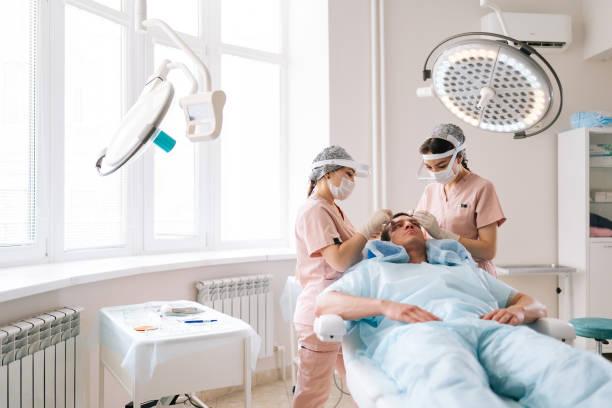
The most common misconception about hair restoration is that success is defined purely by the number of grafts. In reality, a high-quality FUE hair transplant in Dubai depends on Custom Density Planning—the strategic distribution of a finite number of follicles to create the greatest visual impact. Because donor hair is a limited resource, "blanket" coverage is rarely the answer. Instead, we use clinical data to prioritize areas that define your facial structure.
In clinical settings, we observe that the most satisfied patients are those whose transplants are designed with "weighted density." This means placing more hair where it is most visible (the hairline and temples) and tapering it into areas like the crown. This guide explores the mathematics of density, the physical experience of the procedure, and the long-term milestones of your restoration.
The Mathematics of Visual Thickness
Human hair density is measured in follicular units (grafts) per square centimeter ($cm^2$). While a natural, non-thinning scalp has upwards of 80-100 grafts/$cm^2$, a successful transplant typically aims for a "perceived density" that is much lower but strategically packed.
How do practitioners calculate your custom density plan?
To maximize your results, surgeons utilize several clinical variables:
-
Graft-to-Hair Ratio: We prioritize "multi-hair" grafts (containing 3-4 hairs) for the mid-scalp and crown to create volume, while saving "single-hair" units for the delicate frontal edge.
-
Angle of Exit: By placing hair at a flatter angle (15–20 degrees), we increase the "shading" effect of each strand, making the scalp look fuller with fewer grafts.
-
The 50% Rule: Clinical studies show that the human eye cannot detect thinning until 50% of the original density is lost. Therefore, we aim for roughly 40–55 grafts/$cm^2$ to provide a look of full coverage.
Is the High-Density Implantation Painful?
What are the actual sensations during a custom-planned session?
Because custom density planning often involves "dense packing" in specific zones, the procedure can be meticulous and long. However, pain is managed through tiered local anesthesia.
Step-by-Step Patient Sensations:
-
The "Numbing" Phase: You will feel a series of 5 to 8 sharp pinches. To mitigate this, we use a "Gate Control" vibration device that confuses the nerves, making the injections feel like a dull thumping.
-
The Channel Creation: As the surgeon creates the micro-slits for the grafts, you will feel a rhythmic "tapping" or "pressing." Because the area is fully numb, this is often described as a meditative or relaxing sensation.
-
The "Post-Op" Tightness: On the first night, your scalp may feel "stretched" or tight due to the volume of fluid and grafts. This is easily managed with the prescribed anti-inflammatories.
"I was worried that 2,500 grafts wouldn't be enough for my large bald spot. But the way they planned the density—placing more in the front and fading it back—made it look like I never lost a hair." — Mubarak
Safety Considerations: The Risks of "Over-Packing"
Why shouldn't you always aim for maximum density?
While high density is the goal, there is a biological "tipping point." Clinical observation suggests caution in the following areas:
-
Vascular Compromise: If grafts are placed too close together (over 60 grafts/$cm^2$), they compete for the same limited blood supply. This can lead to "necrosis" or poor survival rates.
-
Donor Depletion: If we take too much density from the back of the head to fix the front, the donor area will look thin and "moth-eaten," a condition that is very difficult to repair.
-
Scalp Health: Patients with poor circulation (common in heavy smokers or those with advanced diabetes) must opt for a more conservative density plan to ensure graft survival.
Comparison: Density Strategies by Hair Loss Stage
| Loss Pattern | Primary Focus | Graft Strategy | Typical Density Aim |
| Receding Hairline | Face framing | Singles in front, Doubles behind | 45–55 grafts/$cm^2$ |
| Thinning Crown | Spiral restoration | Multi-hair units for volume | 35–45 grafts/$cm^2$ |
| Diffuse Thinning | Overall "Fill" | Interspersing between native hair | 30–40 grafts/$cm^2$ |
| Complete Baldness | Coverage & Silhouette | Strategic "weighted" distribution | 35 grafts/$cm^2$ (Broad) |
The Custom Density Healing Timeline
When will the "fullness" actually show?
Density is a slow-burn result. The scalp must heal and the follicles must cycle before the visual "boost" occurs.
-
Days 1–10: The "Surgical Phase." You will see the density of the placement in the form of tiny scabs. It looks very full initially because of the "crusts."
-
Months 1–3: The "Empty Phase." The transplanted hairs shed. This is the hardest part for patients, as the area looks thin again.
-
Months 6–9: The "Bulk Phase." The hairs begin to thicken and gain caliber. This is when the "custom planning" starts to become visible.
-
Month 12: The "Final Polish." All hairs have reached their full diameter, providing the permanent density boost planned during your consultation.
"At six months, I could see the pattern, but it still looked a bit 'see-through.' By month ten, the hair got so thick that I could style it with wax for the first time in years." — Julian
FAQ: Maximizing Your Density
Can I get more density in a second session?
Yes. Many patients choose a "high-density touch-up" 12 months after their first procedure to add thickness to specific areas once the first round of grafts has fully matured.
Does PRP help with density?
While PRP doesn't create "new" follicles, it nourishes the transplanted ones and can help "wake up" dormant native hairs, leading to a thicker overall look.
Will my density look different in the sun?
Transplanted hair, like natural hair, may look slightly thinner under direct, harsh overhead light. Custom density planning focuses on how the hair looks in 90% of daily lighting conditions.
Is the "density plan" different for women?
Yes. Female hair restoration usually focuses on "diffuse" density across the top of the head rather than reconstructing a masculine hairline.
Why Choose Tajmeels Clinic?
At Tajmeels Clinic, we don't believe in "cookie-cutter" surgery. Our FUE hair transplant in Dubai is built on a foundation of Custom Density Planning. We use high-resolution scalp analysis to determine your exact donor capacity and then map out a distribution plan that prioritizes your most important features. Our surgeons are artists as much as they are clinicians, ensuring that every graft is placed with a purpose. We provide a transparent, evidence-based journey where we manage your expectations and your donor hair with equal care, ensuring a result that looks dense, natural, and permanent.
Categories
- Arts & Entertainment
- Causes
- Crafts
- Dance
- Drinks
- Film
- Health
- Food Trends
- Gaming
- Home & Garden
- Health & Fitness
- Literature
- Music & Concerts
- Networking
- Other
- Party
- Religion
- Shopping
- Sports
- Theater
- Wellness
- Cryptocurrency
- NFT Trends
- Coin update
- Lifestyle
- Business & Finance
- Entrepreneurship
- Marketing Strategies
- Personal Finance
- Investment Tips
- Industry Trends
- Technology
- Gadgets & Reviews
- Software & Apps
- Cybersecurity
- Emerging Technologies
- How-To Guides
- Education
- Movie & TV Reviews
- Celebrity News
- Book Reviews
- Personal Development
- Motivation & Inspiration
- Life Hacks
- Community & Culture
- Local Events
- Cultural Insights
- Social Issues
- Interviews & Spotlights
- Volunteering & Activism
- Science & Nature
- Animal Behavior
- Beauty Tips
- Fashion Trends
- Product Reviews
- Food & Drink
- Cooking
- Restaurant Reviews
- Travel
- Arts & Crafts
- Photography
- Workout Routines
- Parenting Tips
- News
- Tips & Tricks
- Case Studies
- Product Reviews
- Interviews
- Opinion
- Research & Insights
- Events Coverage
- Personal Stories
- Announcements
- Trends & Predictions
- Guest Posts
Read More
"Egypt Physical Security Market Size, Share, and Trends Analysis Report—Industry Overview and Forecast to 2029 The Egypt Facility Protection Market is experiencing rapid expansion, driven by rising consumer demand, technological progress, and continuous industry innovation. Leading market research firms report that businesses in the Egypt Premises Safety Market are...

"Uterine Fibroids Drug Market Size, Share, and Trends Analysis Report—Industry Overview and Forecast to 2032 The Fibroid Treatment Drugs Market is undergoing significant transformation, driven by technological advancements, shifting consumer preferences, and increasing industry investments. According to top market research companies, the Uterine Leiomyoma Drug Market is...
"Executive Summary Pet Monitoring Camera Market : Data Bridge Market Research analyses that the global pet monitoring camera market which was USD 107.42 million in 2022, is expected to reach USD 640.28 million by 2030, and is expected to undergo a CAGR of 25.00% during the forecast period of 2023 to 2030. Pet Monitoring Camera Market report is a comprehensive background...
The rise of online cricket betting has resulted in an increase in demand for dependable platforms that meet the expectations of customers looking for an unforgettable experience. Platforms like as KGF777 Exchange have established themselves as reliable sources for a seamless online cricket ID experience. Whether you are an experienced bettor or new to the world of cricket betting, selecting...