


What Is Wav2Lip and How AI Lip Sync Technology Is Used Today
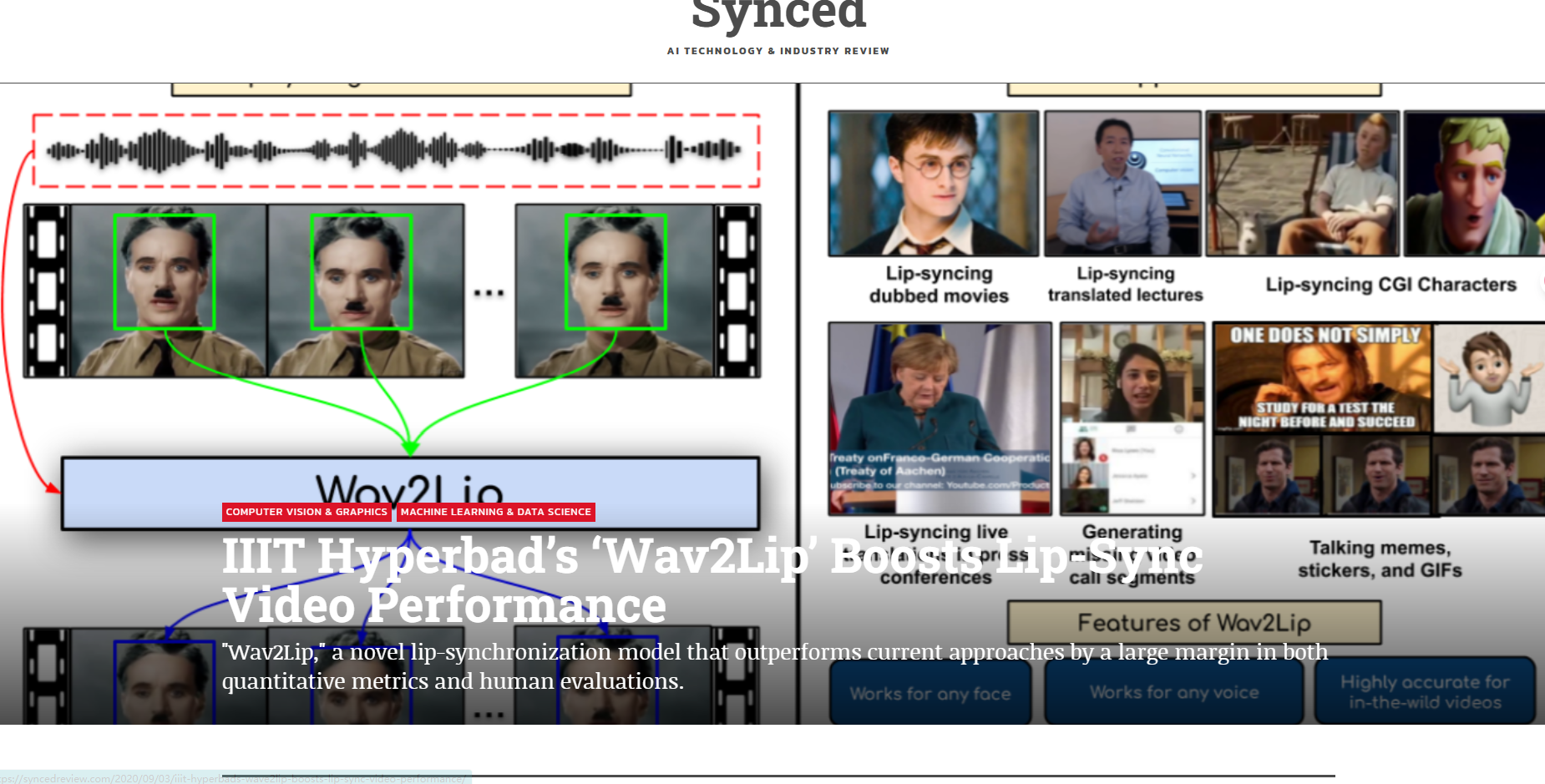
Wav2Lip is an AI-based lip synchronization model designed to generate realistic mouth movements that accurately match a given audio track. The technology focuses on aligning speech sounds with lip motion while preserving the original facial identity, expressions, and head pose in a video.
Originally introduced as a research project, Wav2Lip quickly gained attention for its high synchronization accuracy compared to earlier audio-driven face animation methods. It has since become a foundational reference in the field of speech-to-video generation.
How Wav2Lip Works
Wav2Lip uses deep convolutional neural networks to jointly process audio signals and video frames. Instead of relying on predefined phoneme-to-lip rules, the model learns the relationship between speech features and lip movements directly from data.
A key component of Wav2Lip is its synchronization discriminator, which evaluates whether the generated lip movements are temporally aligned with the audio. This additional constraint significantly improves visual realism and reduces unnatural mouth motion.
Common Use Cases
Wav2Lip-based technology is widely used in several practical scenarios:
-
Video dubbing and localization, where lip movements need to match translated audio
-
Content restoration, such as fixing lip-sync issues in recorded footage
-
Virtual avatars and digital humans driven by voice input
-
Accessibility tools that enhance speech visualization
As interest in AI-generated video continues to grow, many creators look for practical tools that make Wav2Lip-style technology easier to use without complex setup.
Practical Tools Based on Wav2Lip
While the original Wav2Lip project is research-oriented, several online tools and platforms now provide user-friendly implementations built on similar principles. These services allow users to upload a video and an audio file to generate lip-synced results directly in the browser.
One example is Wav2Lip.pro, an online platform that offers AI-powered lip sync generation without requiring local installation or deep technical knowledge. It is commonly used by content creators, educators, and developers who want quick and reliable lip synchronization for video projects.
Ethical Considerations
As with other synthetic media technologies, Wav2Lip raises important ethical questions. Realistic lip-sync generation can be misused if applied without consent or proper disclosure. Researchers and tool providers increasingly emphasize responsible use, transparency, and clear labeling of AI-generated content.
Conclusion
Wav2Lip represents a major step forward in audio-driven facial animation, influencing both academic research and real-world applications. As the ecosystem around lip-sync technology evolves, accessible platforms like Wav2Lip.pro help bridge the gap between cutting-edge research and everyday creative workflows.
Categorias
- Arts & Entertainment
- Causes
- Crafts
- Dance
- Drinks
- Film
- Health
- Food Trends
- Gaming
- Home & Garden
- Health & Fitness
- Literature
- Music & Concerts
- Networking
- Outro
- Party
- Religion
- Shopping
- Sports
- Theater
- Wellness
- Cryptocurrency
- NFT Trends
- Coin update
- Lifestyle
- Business & Finance
- Entrepreneurship
- Marketing Strategies
- Personal Finance
- Investment Tips
- Industry Trends
- Technology
- Gadgets & Reviews
- Software & Apps
- Cybersecurity
- Emerging Technologies
- How-To Guides
- Educação
- Movie & TV Reviews
- Celebrity News
- Book Reviews
- Personal Development
- Motivation & Inspiration
- Life Hacks
- Community & Culture
- Local Events
- Cultural Insights
- Social Issues
- Interviews & Spotlights
- Volunteering & Activism
- Science & Nature
- Animal Behavior
- Beauty Tips
- Fashion Trends
- Product Reviews
- Food & Drink
- Cooking
- Restaurant Reviews
- Travel
- Arts & Crafts
- Photography
- Workout Routines
- Parenting Tips
- News
- Tips & Tricks
- Case Studies
- Product Reviews
- Interviews
- Opinion
- Research & Insights
- Events Coverage
- Personal Stories
- Avisos
- Trends & Predictions
- Guest Posts
Leia mais
In today’s digital world, learning is no longer limited to classrooms and textbooks. Children now have access to exciting opportunities that help them explore their creativity, develop new skills, and discover their passions—all from the comfort of home. One of the best ways to encourage this kind of learning is through online hobby classes for kids. These classes allow...
"Bariatric Patient Room Market Size And Forecast by 2029 Global bariatric patient room market is expected to grow at a significant CAGR of 8.10% in the forecast period of 2022 to 2029. The bariatric patient room market was valued at USD 2,271.96 million in 2021 and is expected to rise to 4,236.49 million by 2029. Lastly, the study emphasizes the broader implications of these...

The Agricultural Pheromones Market is undergoing a significant transformation, with industry forecasts predicting rapid expansion and cutting-edge technological innovations by 2032. As businesses continue to embrace digital advancements and strategic shifts, the sector is set to experience unprecedented growth, driven by rising demand, market expansion, and evolving industry trends. A...
How Study Abroad Consultants in Chennai Help with University Applications Introduction: Streamline Your Application Process Applying to international universities can be overwhelming due to the complexity of each institution’s criteria, deadlines, and documentation. This is where study abroad consultants in Chennai play a crucial role. Their guidance not only simplifies the process but...

Blade & Soul NEO is almost here, and fans of the legendary MMORPG can finally prepare for the next evolution of this beloved title. With pre-downloads now available, the buy BnS NEO Divine Gems excitement surrounding the game has reached new heights. We attended the recent Blade & Soul NEO press event to gather all the essential details about the game, including major gameplay changes,...
